Kenner
And many more
1975 – 1999
Six Million Dollar Man, Strawberry Shortcake, Super Powers, Batman, Jurassic Park. A back catalog of icons.
Coming soon →Hammer & Mold brings together original vintage toys, the companies that made them and the stories that made them famous. Explore the history. Watch the commercials. Buy the originals.
Live auctions on original vintage toys. Place a bid, or take it straight away with Buy now.
We organize the collection the way it was built: maker first. The maker is the molder; its toy lines live beneath it. Filter the lines by their maker, or sort them across the years.
The line that invented the modern 3¾-inch action figure, and sold an empty box one Christmas to do it.
Meet the Molder →Proton packs, ecto-plasma and gross-out mutations. The strangest, most inventive toys on the shelf.
Meet the Molder →Soft-vinyl monsters from Tokyo's tokusatsu boom. Godzilla, Ultraman and the beasts of late-night television, hand-poured and hand-painted.
Meet the Molder →The material itself. Hollow Japanese soft vinyl, slush-cast in heated metal moulds, pulled out by hand and sprayed by hand. And Hiroshi Goto, who has been painting it for seventy years.
Meet the Molder →Mutant reptiles, pizza and ooze. The line that turned a black-and-white comic into a worldwide phenomenon.
Meet the Molder →The gentle alien of 1982. Poseable figures, glowing fingers and the most famous bicycle in cinema.
Meet the Molder →Mr. T, machine guns and a black van. No plan survived contact, but the toys did.
Meet the Molder →Four inches of hard plastic, one move each, and a ring to throw them in.
Meet the Molder →The monsters you could actually own. Cheap vinyl on a hook by the till, from the company a Holocaust survivor built out of a ten-cent bouncing ball.
Meet the Molder →Britain's Star Wars line, from the company that also made Action Man. Its Death Star is printed card because plastic cost too much, which is exactly why it is now the one collectors chase.
Meet the Molder →The toys about toys. Pull-string Woody and Buzz, straight from Pixar's first feature.
Meet the Molder →Anyone can sell an old toy. We want to tell you what you're actually looking at.
Year, maker, series, scale, accessories and condition. The details collectors actually want to know.
Who made it, when it appeared and what made it special. The story behind the plastic.
The original TV commercials that introduced these toys to the world, right where they belong.
The company that turned licenses into legends. From a toy oven that actually baked to an empty box that launched Star Wars, Kenner spent five decades deciding what a generation would find under the tree.
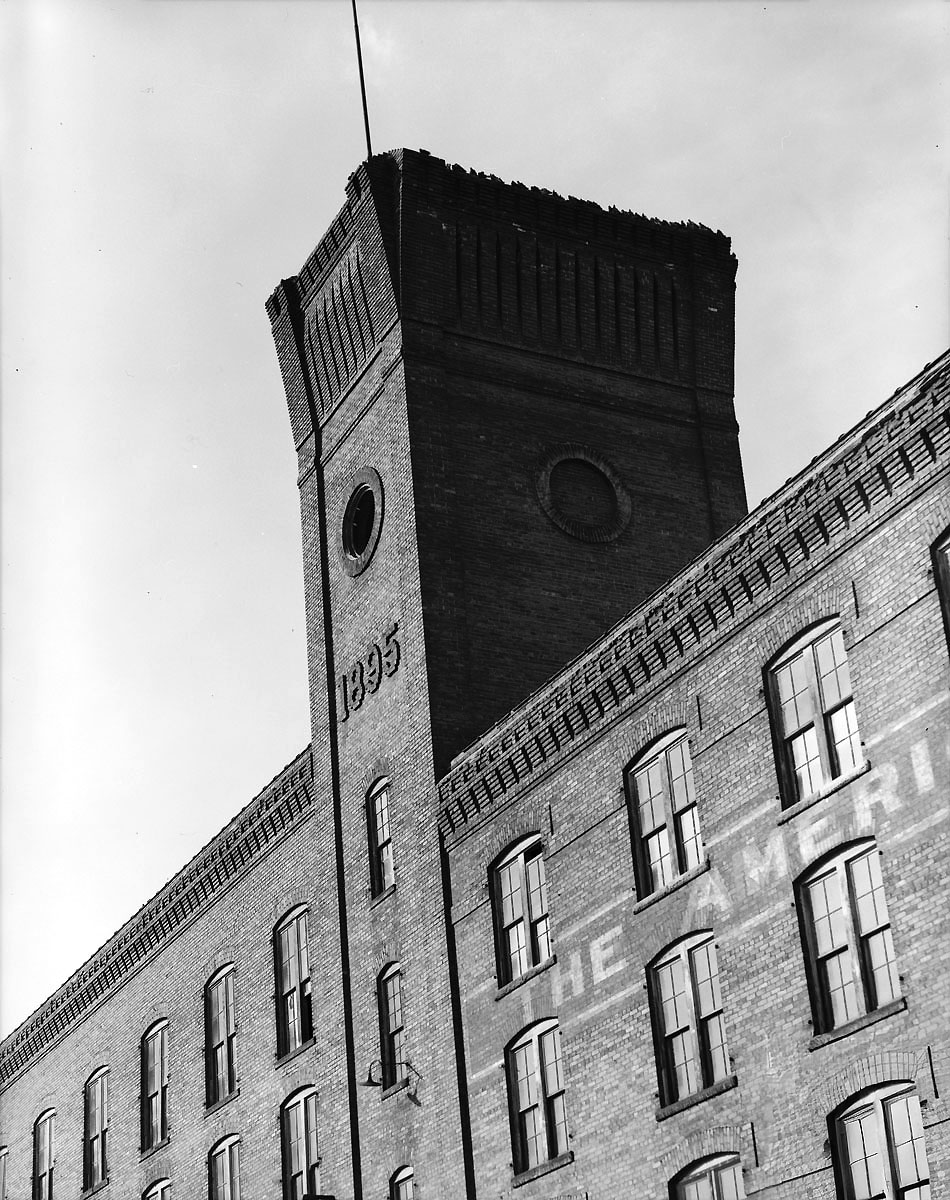
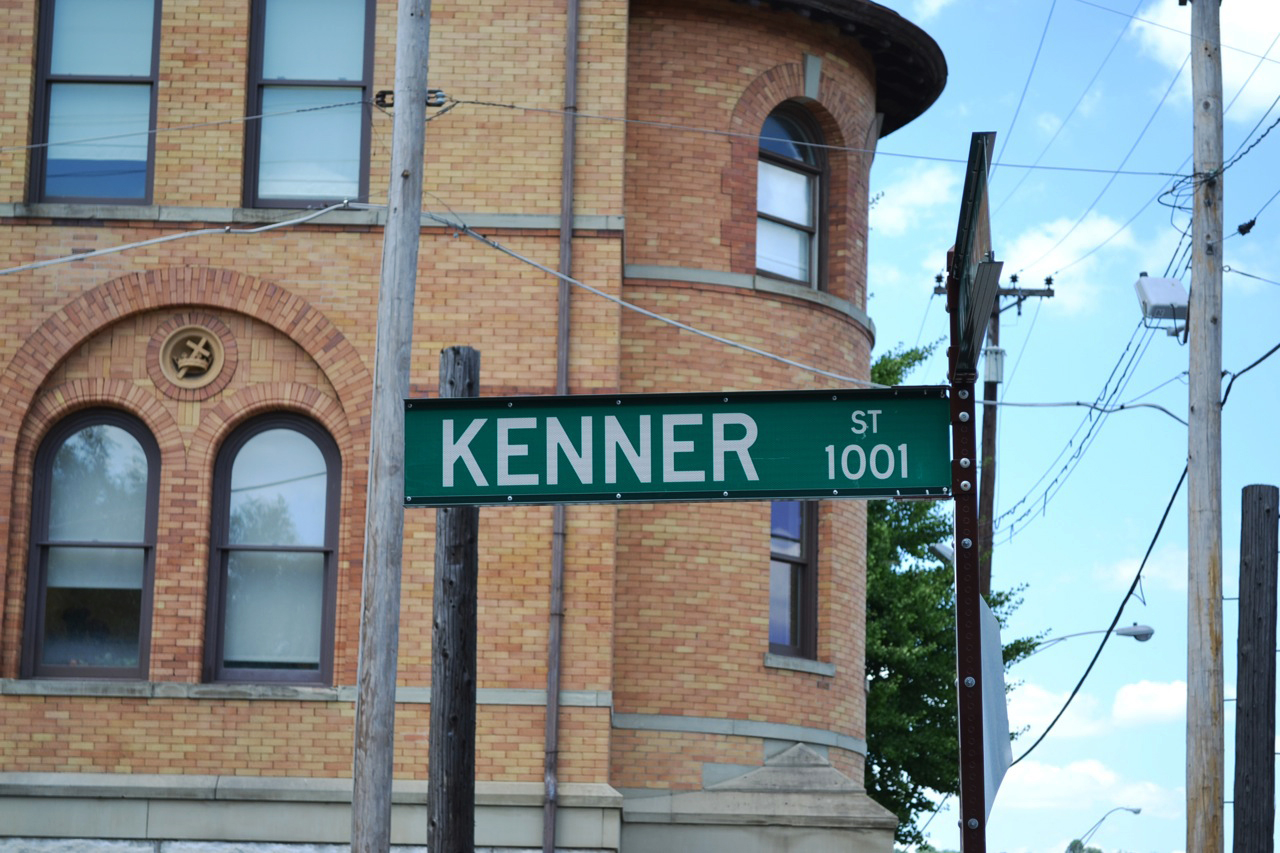
In 1947, three brothers, Albert, Philip and Joseph Steiner, started a toy company in Cincinnati, Ohio, and named it after Kenner Street, where their office stood. It was a small beginning for a firm that would end up shaping the shelves of nearly every toy shop in the Western world.
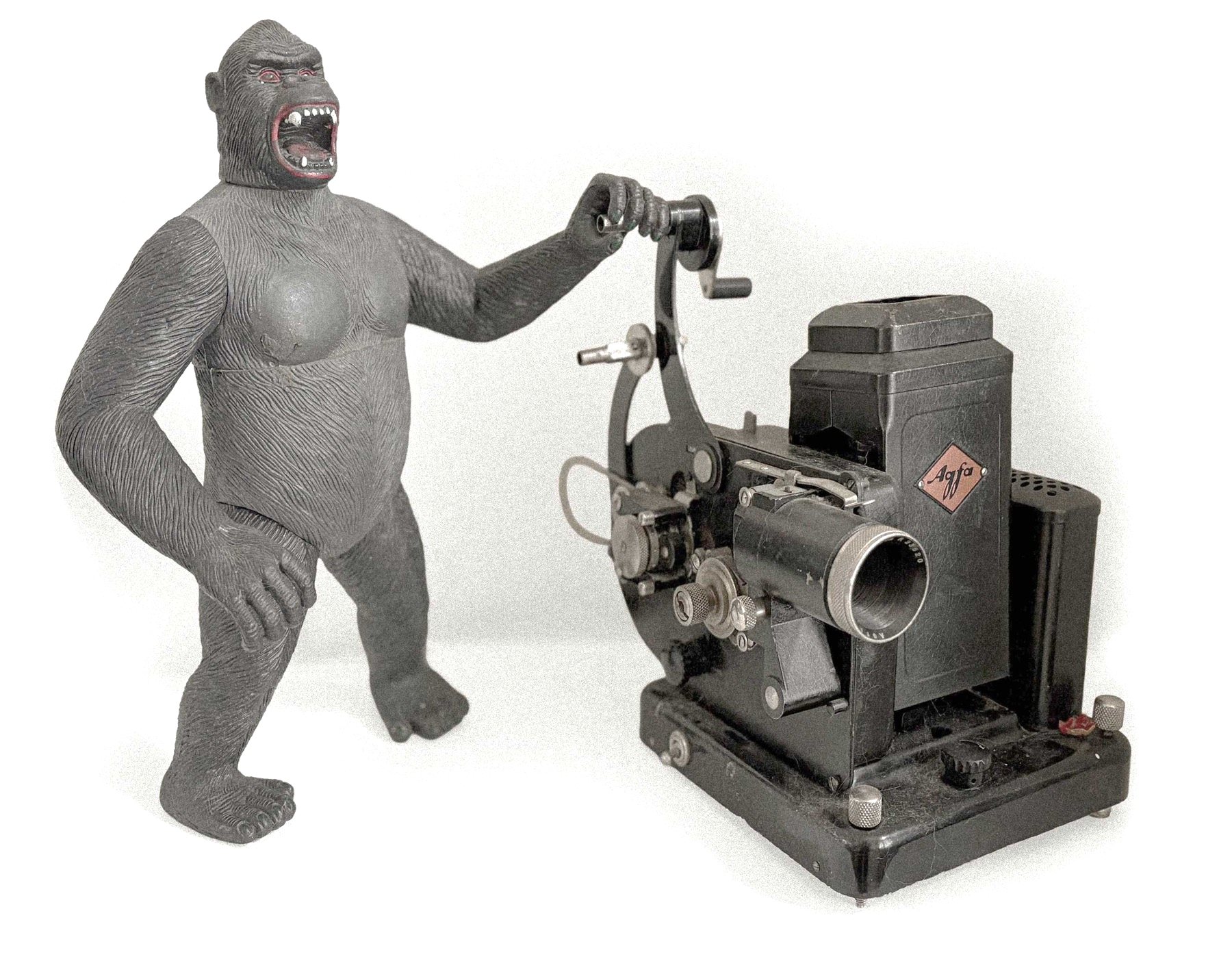
Their early hits were toys that actually did something: the Give-A-Show projector in 1959, and in 1963 the Easy-Bake Oven, a miniature oven that genuinely baked, sold by the million and never really gone. Spirograph followed in 1966, and by 1976 a rubbery strongman called Stretch Armstrong had joined them. Kenner had a knack for turning a clever idea into a phenomenon.

When Kenner won the Star Wars license in 1977, there was no way to tool, mold and ship action figures in time for Christmas. So Kenner sold a promise instead. The Early Bird Certificate was, in effect, an empty box with a mail-away voucher. Post it back, and four figures would follow in early 1978. It should have failed. It sold in the millions.
The 3¾-inch (9.5 cm) figures that arrived in 1978 set the template for action figures everywhere: small enough that a child could own a whole galaxy. Sales doubled to $200 million that year, and by 1983 more than 300 million Star Wars items had been sold. The Millennium Falcon landed in 1979, and for a while Kenner was less a toy company than a machine for manufacturing childhood.
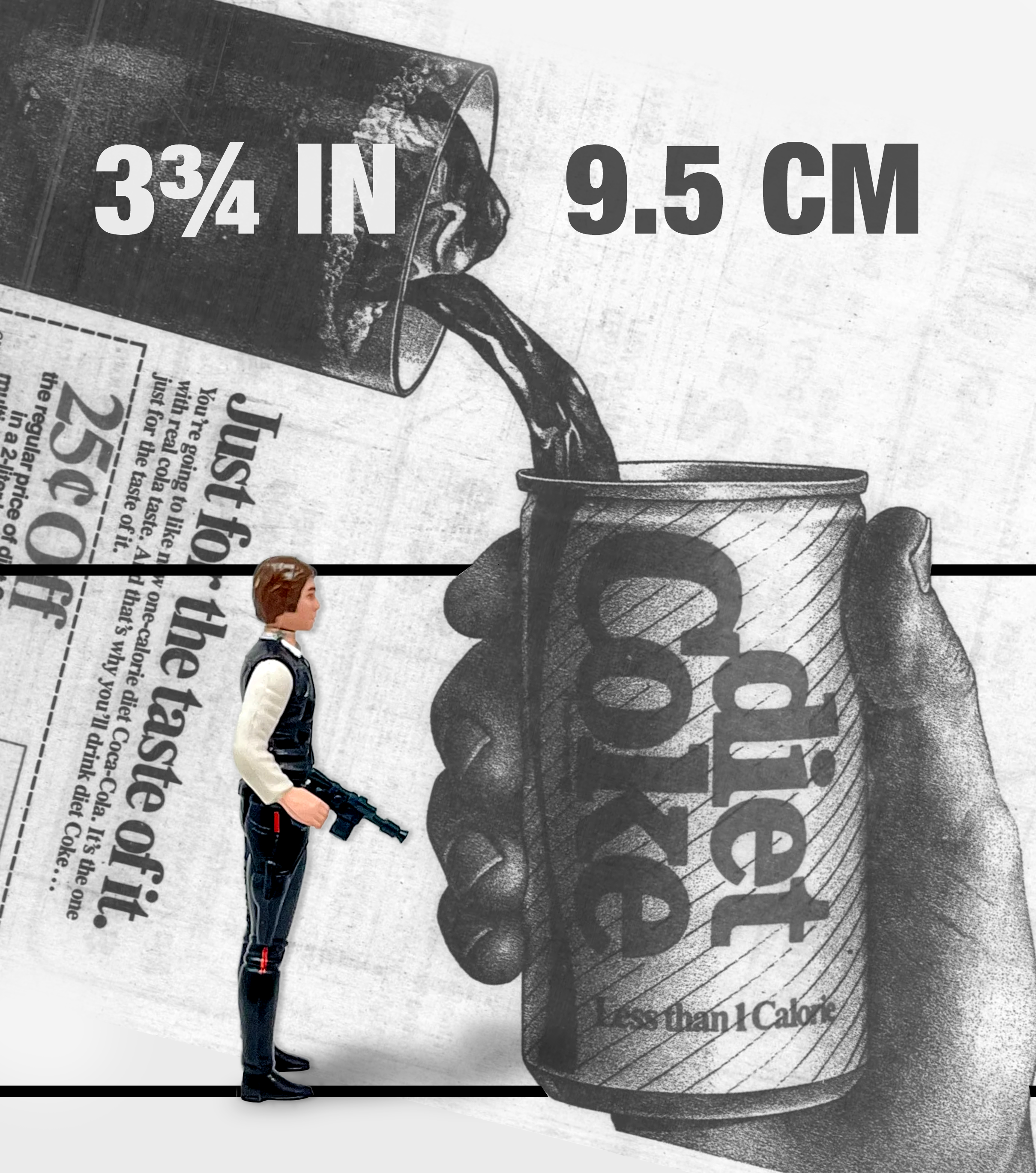
The short version of a long history: how a Cincinnati start-up became the maker behind the toys people still hunt for today.
Kenner's licenses read like a childhood. These are the ones represented in the collection.
The line that started with an empty box and ended up on every shelf. Four of them have been on our bench, and two of them carry their date on the inside of a leg.
Read it →Proton packs, ecto-plasma and gloriously gross mutations. Five have been on our bench, and every one of them names the wrong company in the plastic.
Read it →Six Million Dollar Man, Strawberry Shortcake, Super Powers, Batman, Jurassic Park. A back catalog of icons.
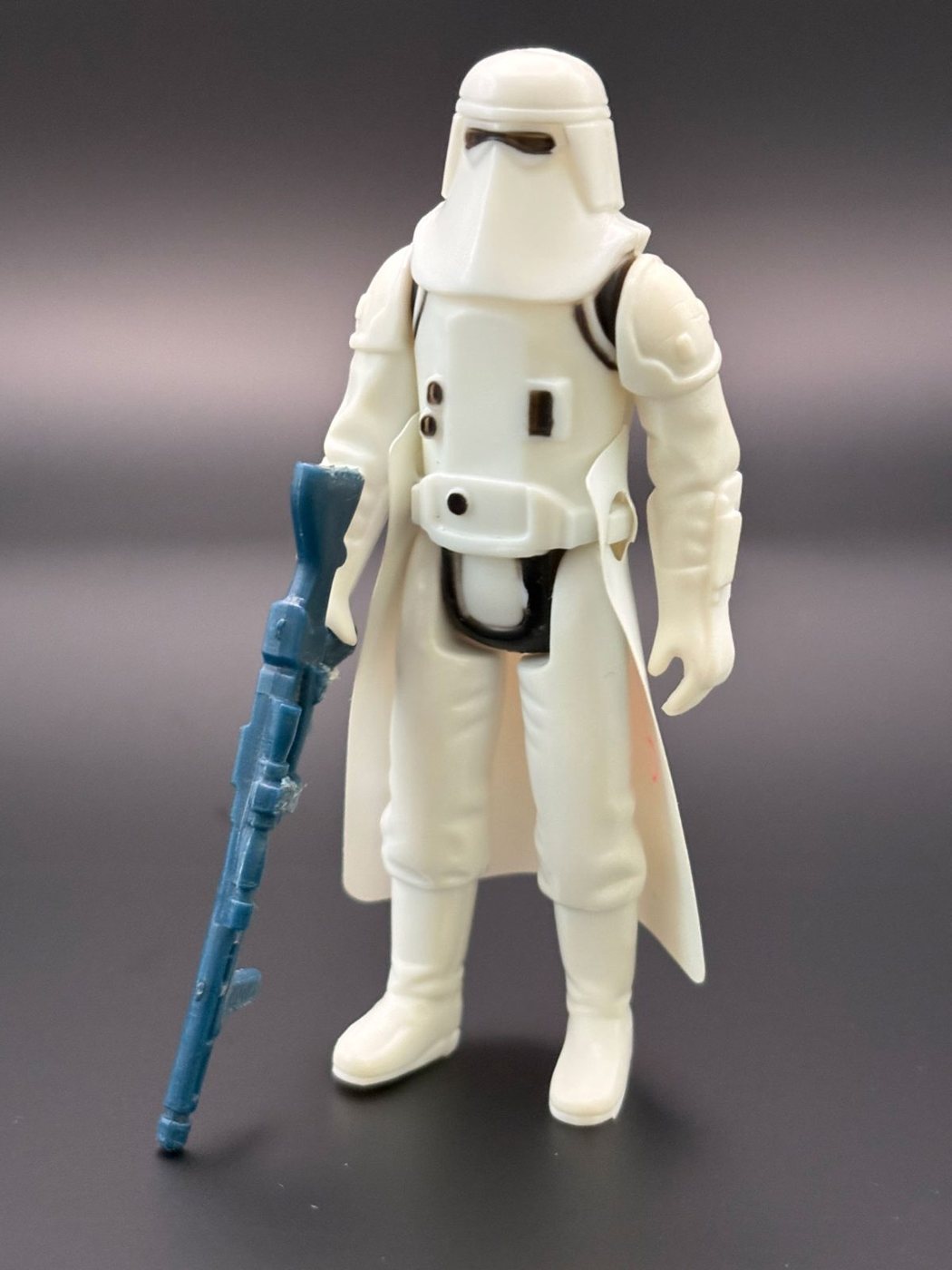
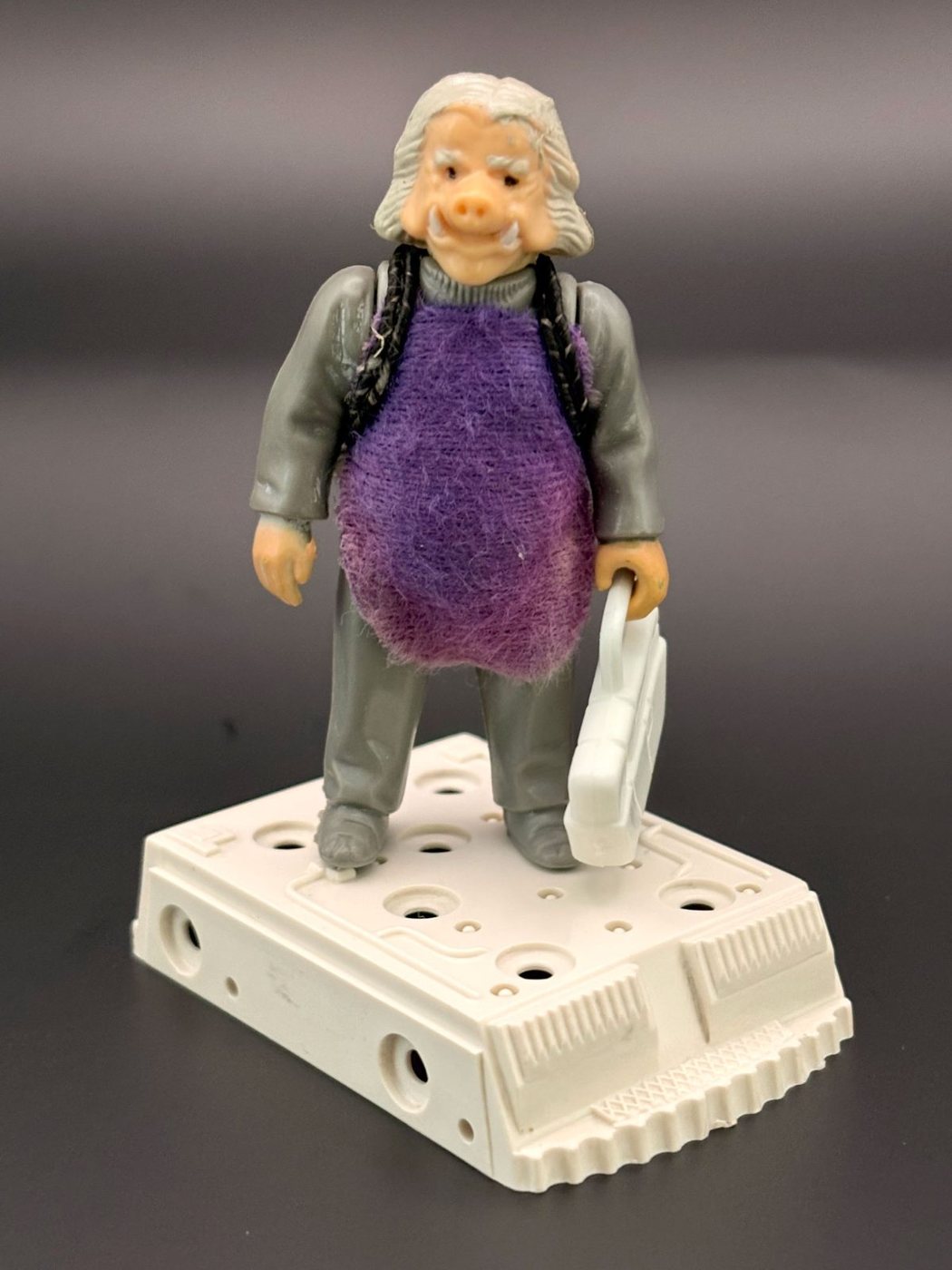
Coming soon →Four Kenner figures from the 1980 Empire run came through Haarlem. Two of them carry their copyright moulded into the inside of a leg, which is the most useful thing about a Kenner figure and the thing almost no listing photographs.
Kenner pressed the copyright into the tool, so it comes out on every figure that tool ever stamped, on a surface a child would never see and a reseller cannot retouch. Our 2-1B reads © L.F.L. 1980 down the left leg and MADE IN HONG KONG down the right. Our Snowtrooper reads exactly the same two things with the legs the other way round, which is a different cavity in a different tool and nothing more sinister than that.
That distinction does the same work here as the 1989 stamp does on a Hero Turtles playset. A mould keeps stamping its own year for as long as it runs, so a figure bought in 1983 can carry 1980 in the plastic and both facts are true of different things. A listing that reports the leg as the release date is reporting the tooling and calling it the toy.
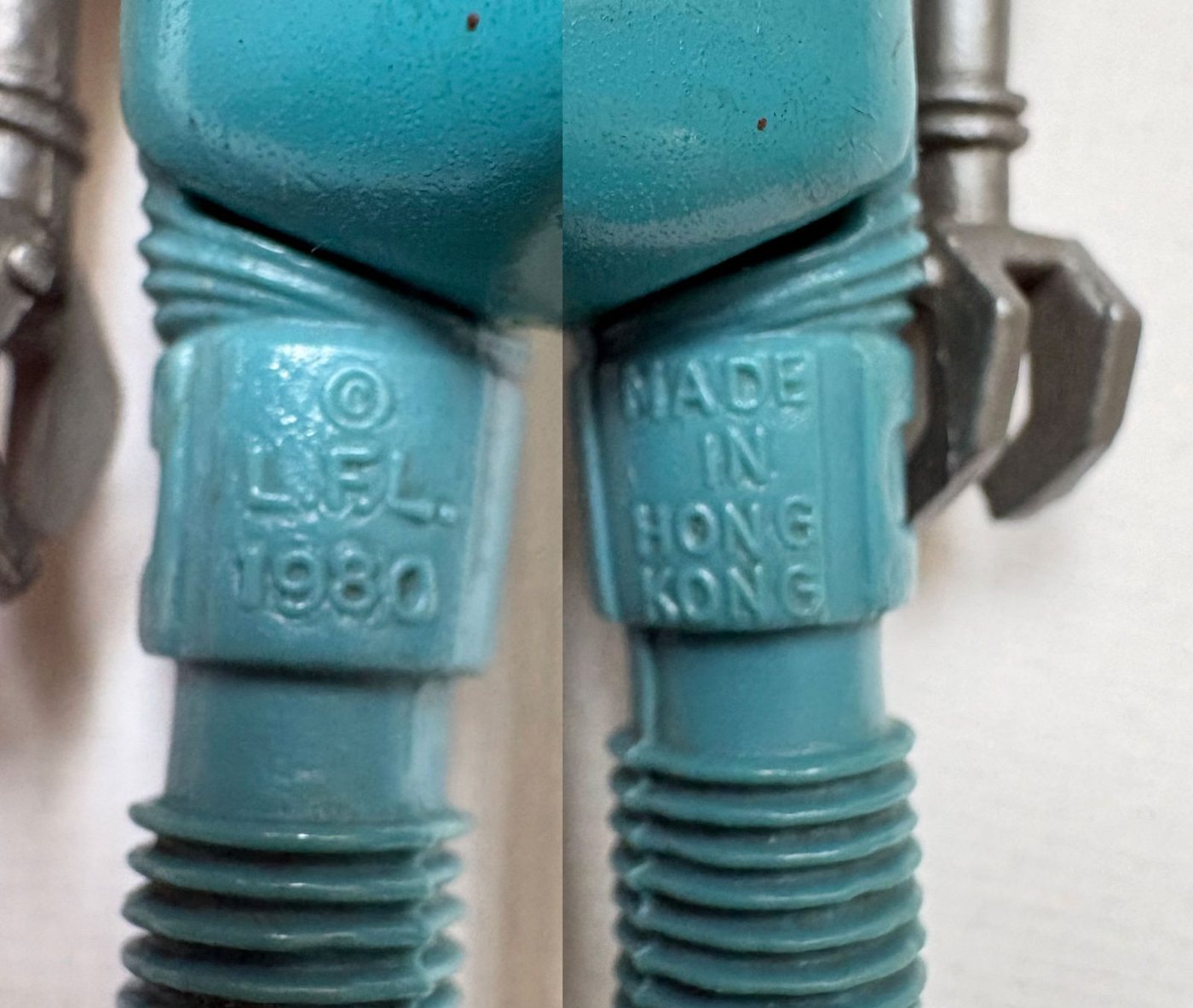
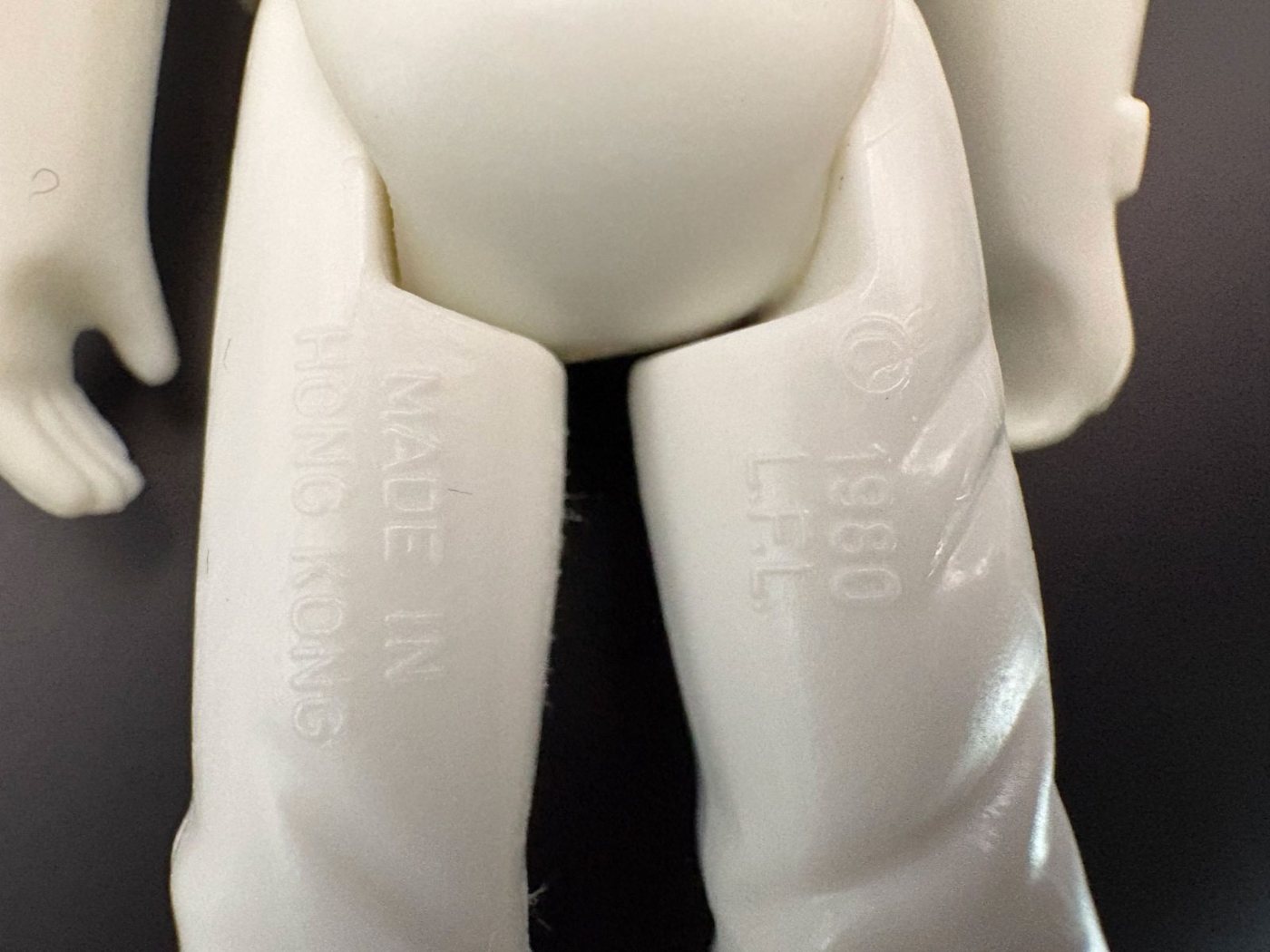
L.F.L. is Lucasfilm Ltd. The earlier figures do not say it. They say © G.M.F.G.I., for General Mills Fun Group Inc, because General Mills owned Kenner when the first wave was cut and it was General Mills whose copyright went into the steel. Reading which of the two is on a leg puts a figure on one side or the other of that change without knowing anything else about it.
The country is the other half. Hong Kong is the common one and it is what both of ours say, but the same figures were run in Taiwan, Macau and later China, and to a collector those are different objects rather than the same object from a different address. Country of origin is the most worked variant axis in the whole hobby, which is exactly why a photograph of the legs belongs in every listing and is in almost none of them.
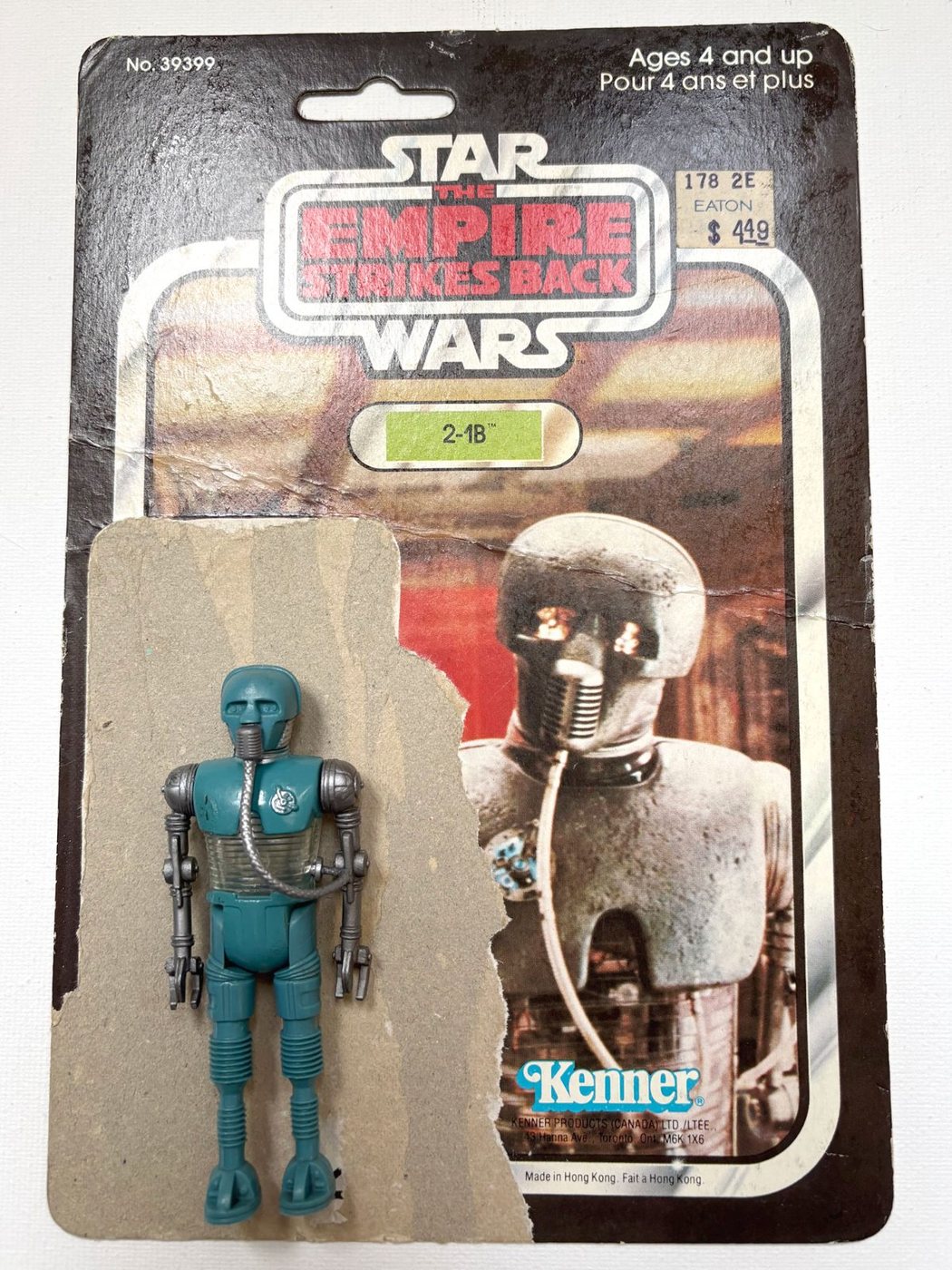
Three figures, three answers. The Snowtrooper still holds its blue-grey rifle, so it is complete. The 2-1B has lost the tool that fitted its scanner arm, so it is not, whatever its condition says. The Ugnaught has both of the things it shipped with: the purple smock and the white tool case.
Collectors price that gap harder than they price wear. A figure with light rubbing and its original weapon clears more than a sharp one holding nothing, because the paint is what one example did over forty years and the accessory is what the release was. Wear is the figure's history. A missing accessory is a hole in the object.
Soft goods are the part that does not survive. The Ugnaught's smock is fabric, so it frays, fades and takes the dirt, and no amount of cleaning brings back a weave. It is also the piece that cannot be recut from a tool, which is why on the handful of Kenner figures that wear cloth it is the cloth and not the plastic that decides the grade.
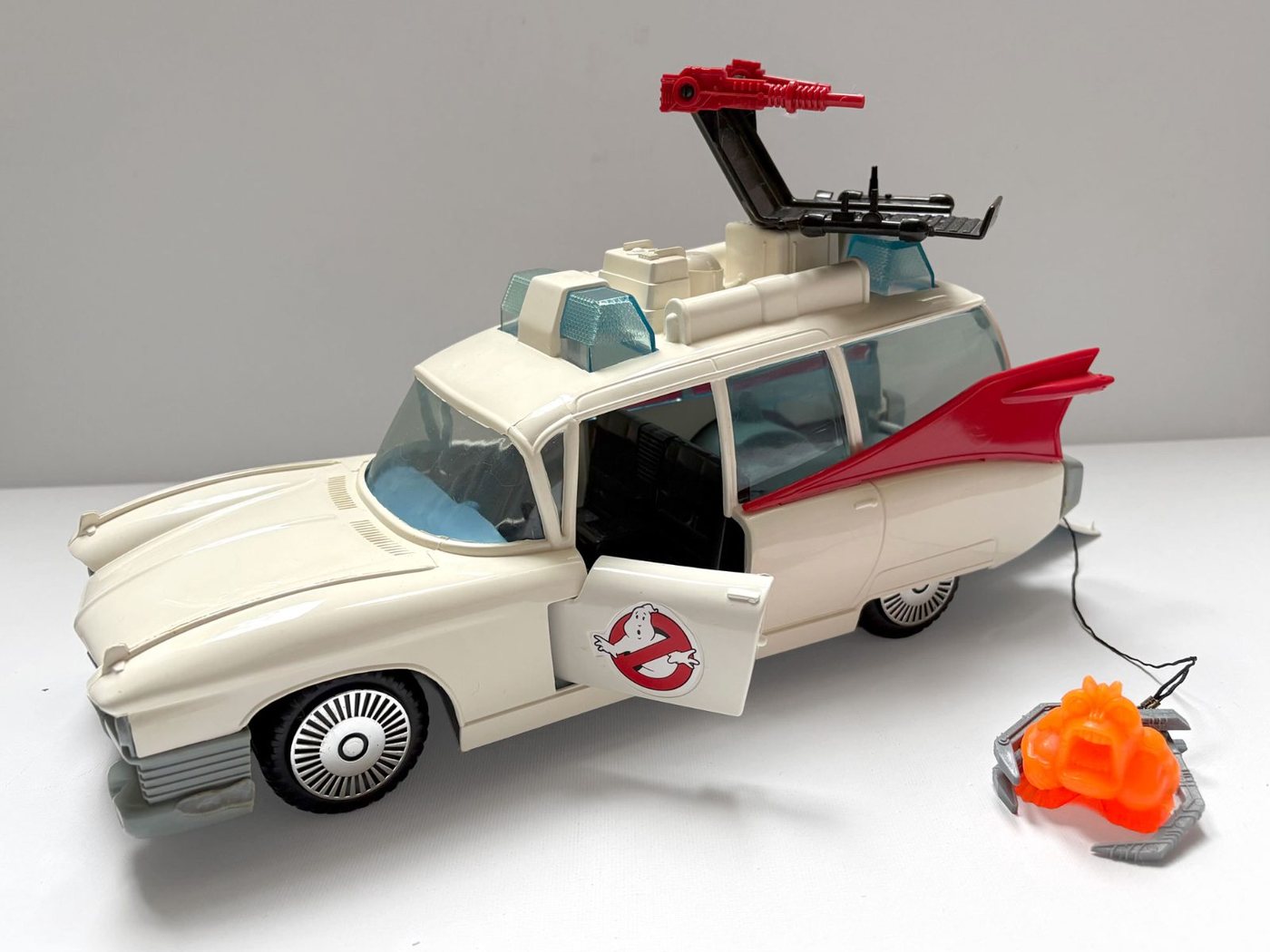
Five came through Haarlem: the Ecto-1, two Haunted Humans, a grabbing ghost and a Stay Puft. All five photograph their moulded stamp, all five stamps say the same company, and it is not the one that made them.
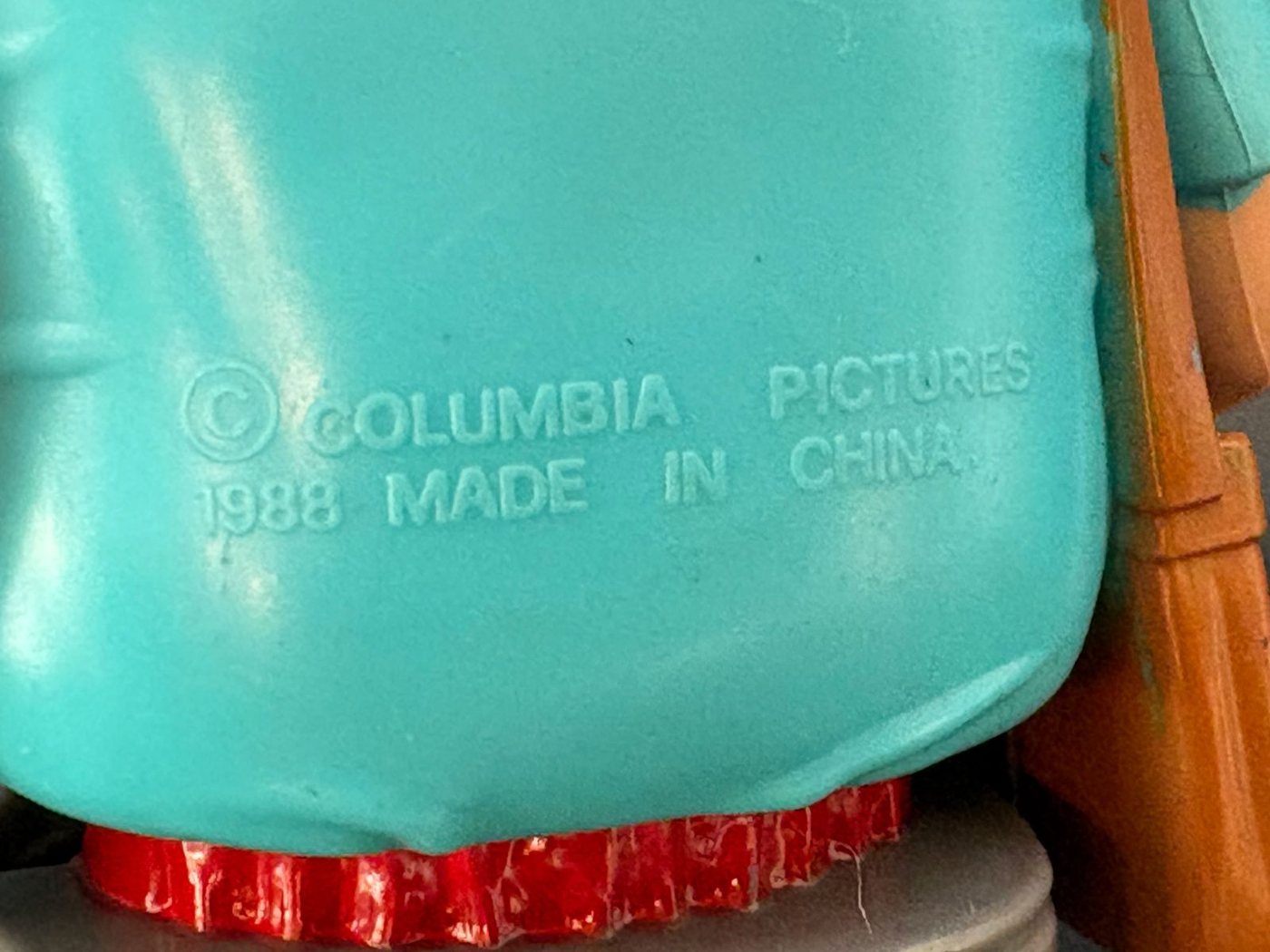
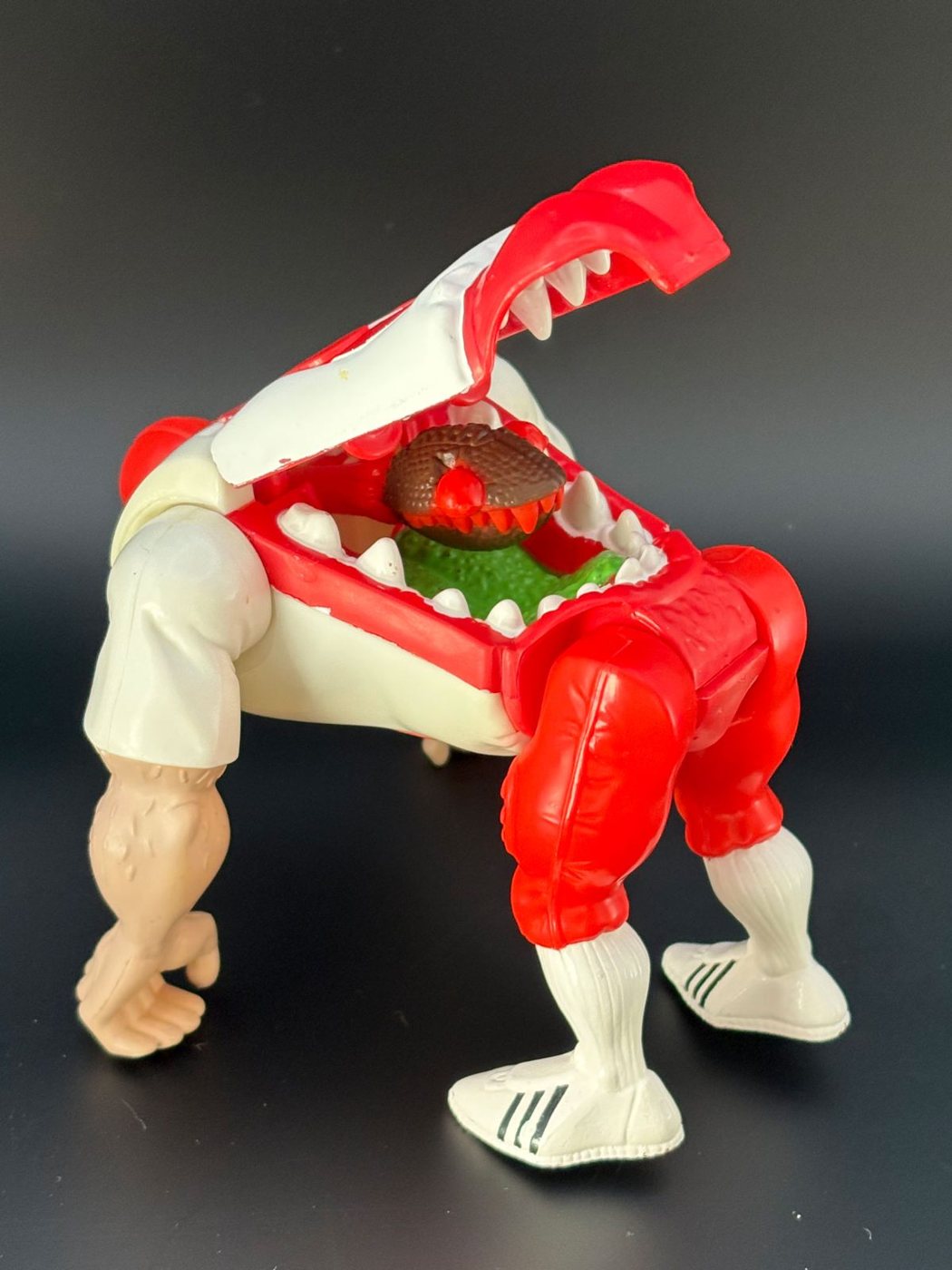
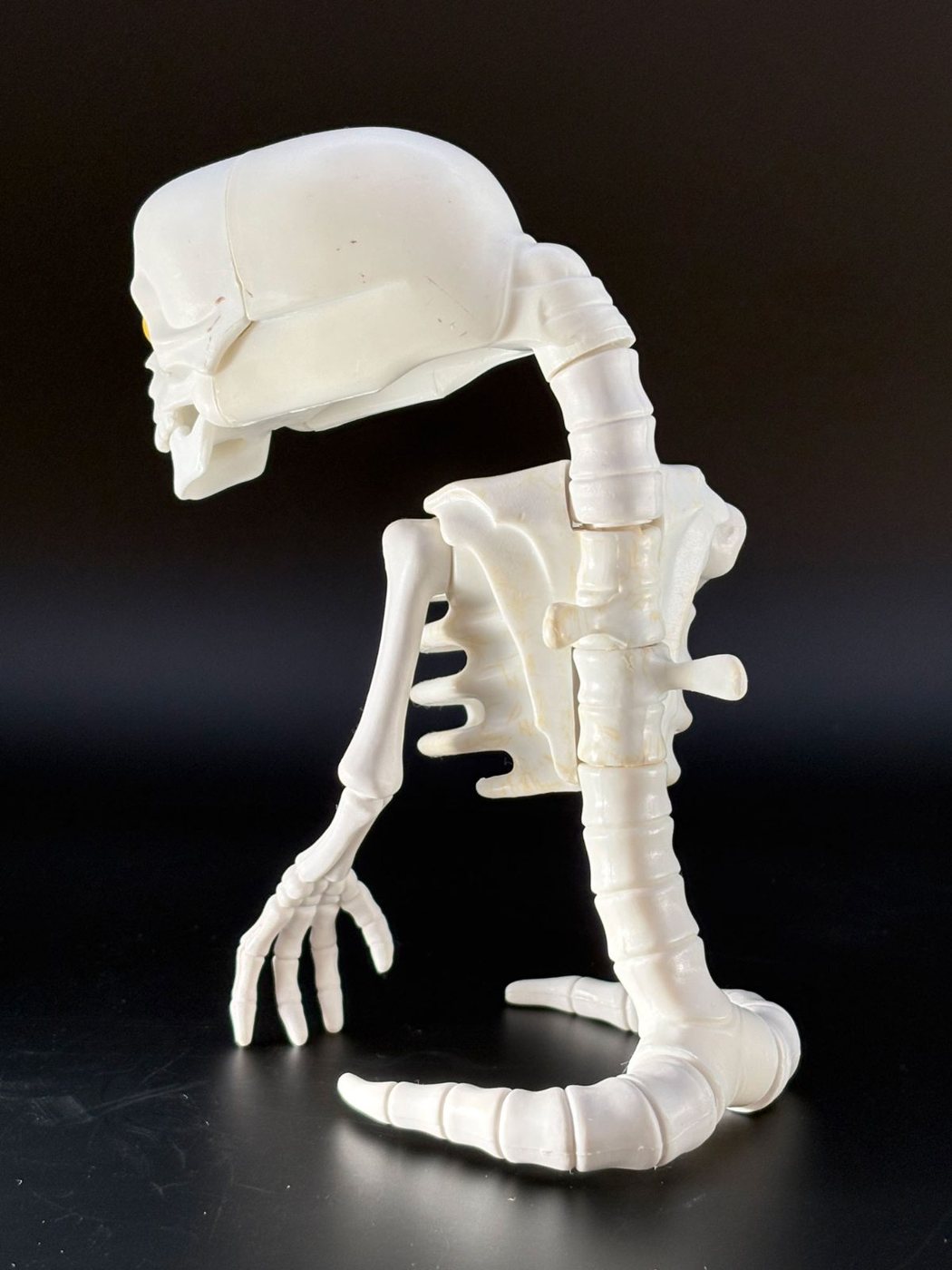
The Ecto-1 reads © 1984 COLUMBIA PICTURES, MADE IN MEXICO under the chassis. Mail Fraud carries © COLUMBIA PICTURES 1988, MADE IN CHINA across the back of his shirt. Tombstone Tackle, the same, moulded into a red thigh. Bad-To-The-Bone, 1984 and China. Stay Puft has the shortest stamp of the five, © 1984 Columbia Pictures under a foot, and that is every word the plastic offers.
This is the same rule a Kenner Star Wars leg follows and it catches people out in the same way. There the stamp says L.F.L., for Lucasfilm. Here it says Columbia, who made the film. In neither case does the company that cut the tool and filled it put its own name on the part. So a stamp will confirm what a toy is licensed from and where it was run, and it will not, on its own, tell you who made it. On these five, the box and the catalogue are the evidence for Kenner. The plastic is not.
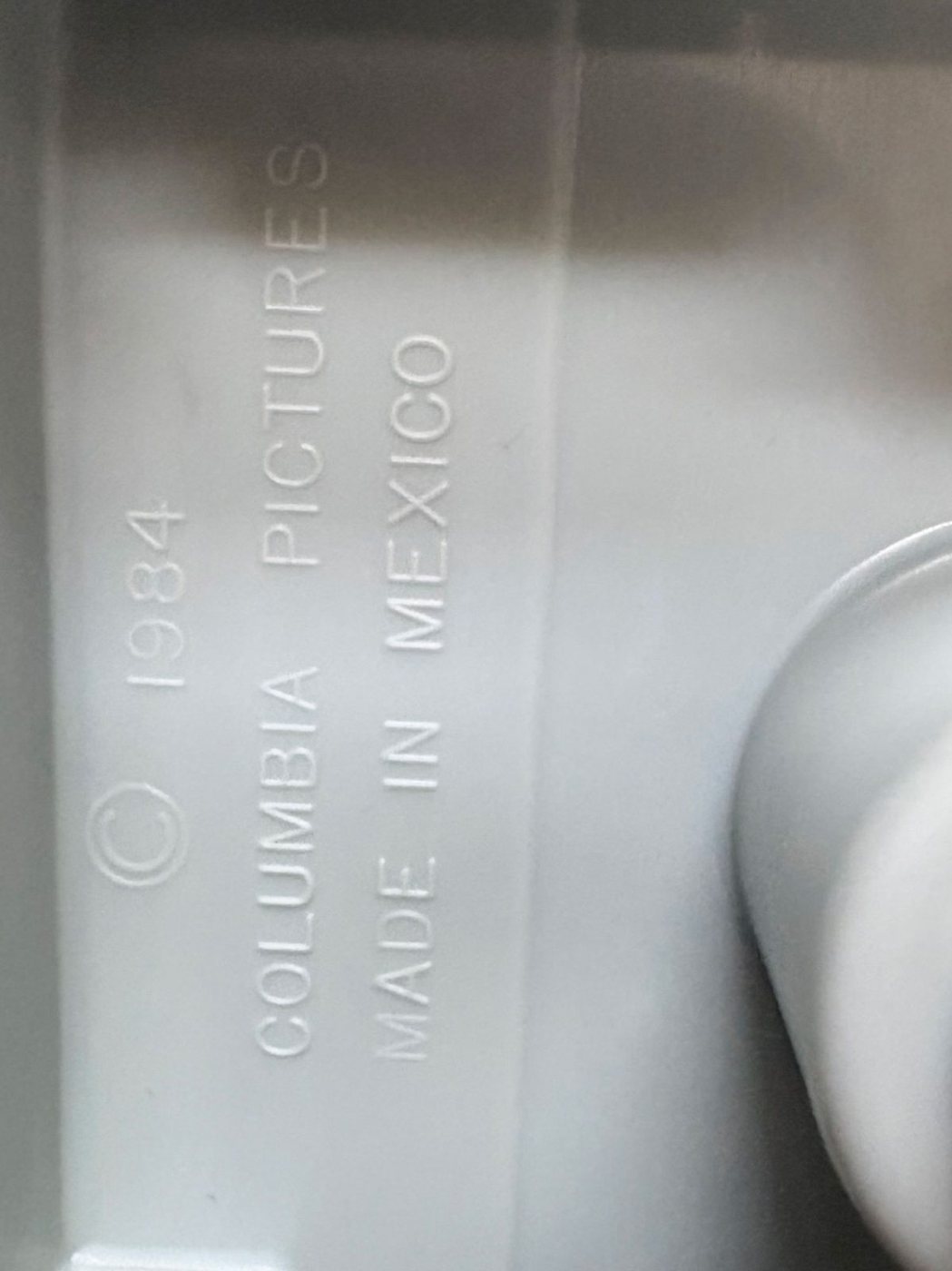
1984 is the film. The cartoon that this toy belongs to, The Real Ghostbusters, did not reach television until September 1986, and Kenner's line began filling Christmas orders that year. This particular Ecto-1, the cartoon version with the pop-up gun rack on the roof, was aimed at Christmas 1986 and slipped a year. The plastic is dated three years before the object existed.
That is a different error from the one a Star Wars leg makes. There the year is the tooling date and it runs a season or two behind the shelf. Here it is the film licence date, and it can be years out. What the two have in common is the direction: a moulded year is never later than the toy and is very often earlier, so a date in the plastic is a floor and never a reading.
The year does move, just not with the product. First wave carries 1984. Haunted Humans, out in 1988, carries 1988. It tracks the licence being renewed rather than the tool being cut or the toy being sold. And the addresses move too: this Ecto-1 was run in Mexico while the four figures beside it came out of China, and the Kenner Star Wars figures a decade earlier came out of Hong Kong. Three lines, three decades, three factories, one company.
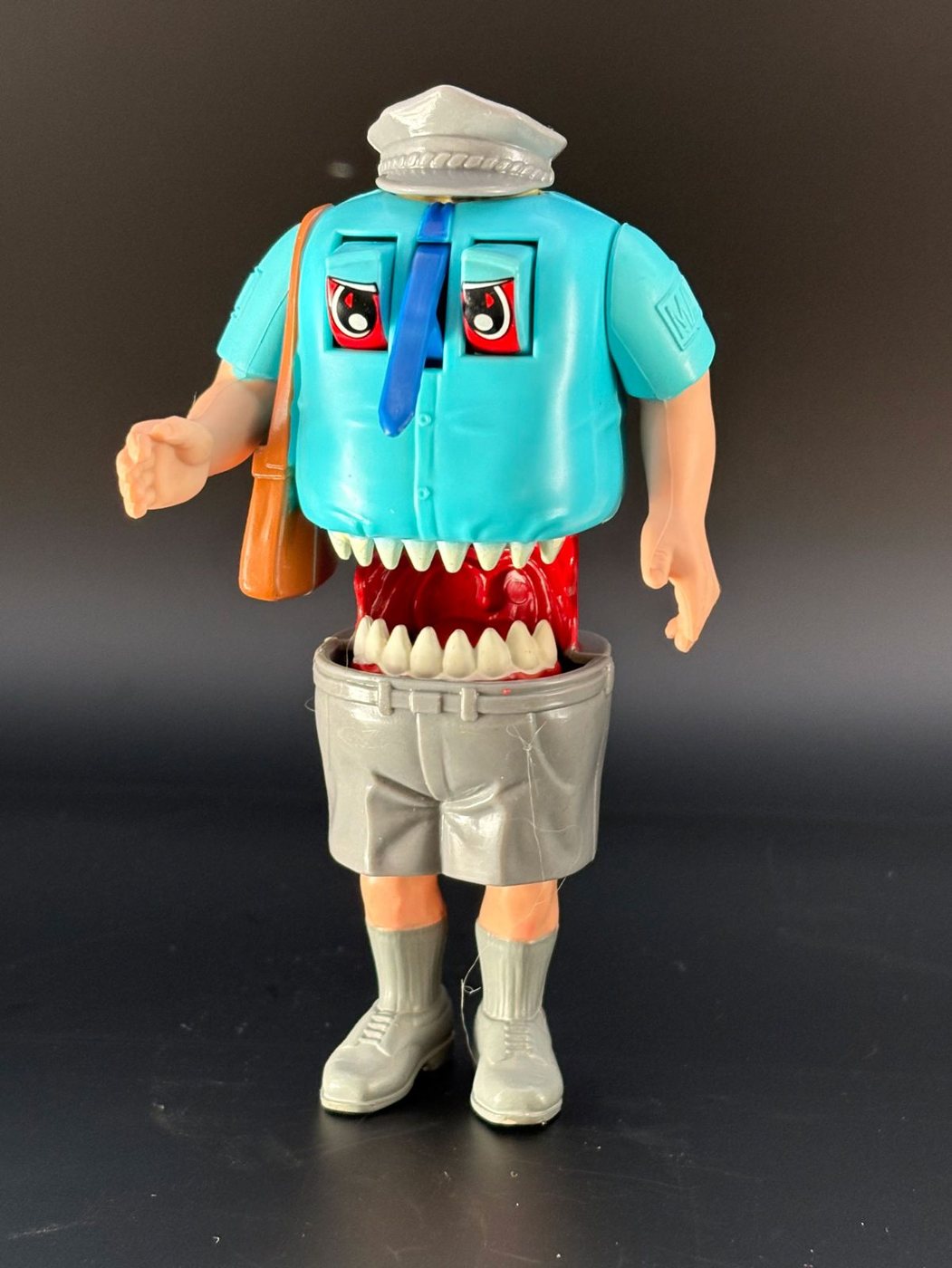
Every one of the four figures here does something. Tombstone Tackle is a footballer who splits open at the waist so a monster can lean out of him. Mail Fraud's shirt slides up over a set of teeth. Bad-To-The-Bone is a ribcage that closes around another figure, with a skull that hinges forward and eyes that move as it goes. Stay Puft, alone among them, is a single moulding that only stands there.
Photograph any of the three moving ones and you have proved the pieces are present and nothing about whether they still work. A hinge can be photographed shut and be split. A slide can look perfect and be seized. On a Star Wars figure the accessory is the thing that goes missing and a photograph settles it in one frame. On these, the thing that fails is invisible, and it is the reason the toy was bought in the first place.
That is why our sell page asks a seller, in so many words, what the photographs cannot show. Whether it still works is a question only the person holding it can answer, and on a toy built around a mechanism it moves the price further than any amount of paint. A listing that leaves the question blank is asking you to guess, and on a Haunted Human the guess is most of what you are paying for.
The television spots that sold the toys the first time around. Six from the Kenner vault. They play inline here; the title opens the clip on YouTube.
Our own reading of the toys, checked against the public record. Follow these if you want to go further than we did.
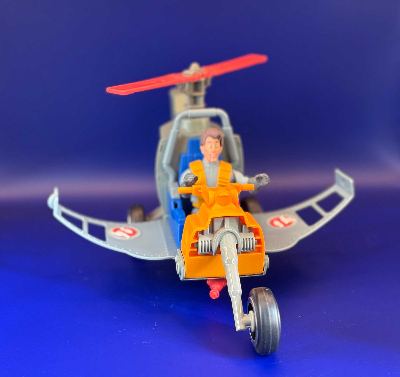
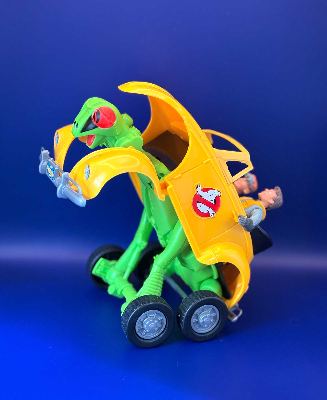
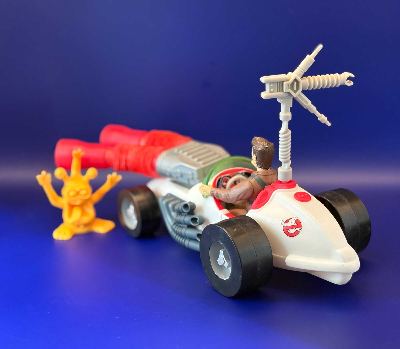
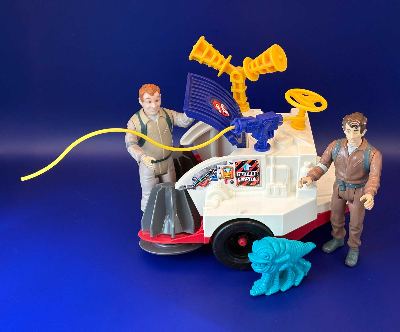
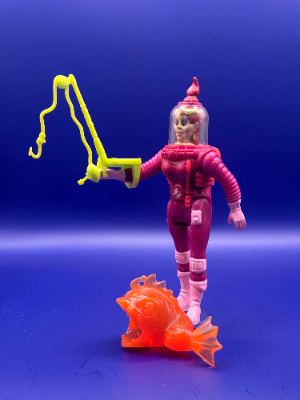
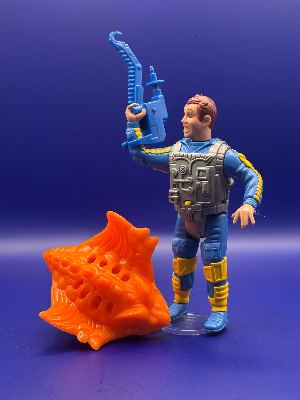
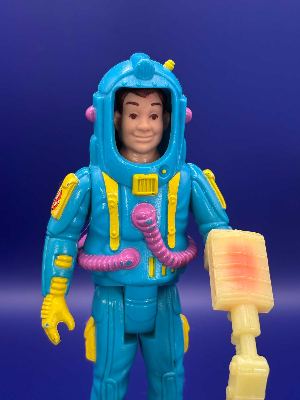
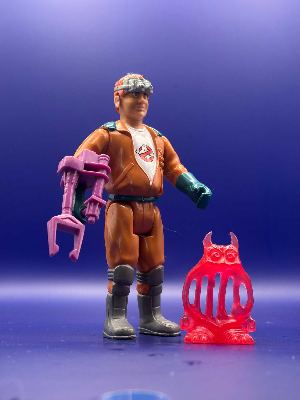
A private collection that grew into something bigger. This is where it comes from, and what we hunt for.
What began as a handful of childhood pieces turned into a hunt: for the odd, the overlooked and the wonderfully strange. The finding, the careful cleaning, the search for a missing weapon or a lost accessory, the stories behind each toy. Somewhere along the way the collecting became a way of living.
We are drawn to the weird ones. Toys that were played with, loved and actually handled, over the pristine pieces sealed and graded never to be opened again. A toy locked in plastic, never to be read or felt, becomes a frozen artifact. We would rather keep them alive.
Have a collection of your own? We buy and take on whole collections and single pieces. Tell us what you have, send a few photos, and we will look after it.
Upload a few clear photos. Our AI identifies the toy, dates it, checks the condition and builds the listing for you. It also reviews recent sales to suggest a fair starting price.
Identification is free. You only use a listing when you decide to sell.
Add clear photos of the front, back, accessories and any visible flaws. Include a close-up of the maker's stamp where possible.
You can also add your own source or a note of direction, either to point us at something you already trust or to have the identification double-checked against it.
A worn or partly legible stamp is fine.
Our AI reads the toy the way Hammer & Mold does, dating it from the moulded stamp rather than the box, then identifies the year, line and variant, grades the condition and reviews recent sales to suggest a price.
You see the identification, the sources, the condition, the pricing and the listing details before anything goes live. Change what you like, set your Reserve or Buy Now price, then approve the listing.
Toy identification is free and unlimited. Photograph anything and we will identify it, date it, show what originally came with it and grade its condition. You only pay when you list. Choose a package based on how much you sell, or let us work out which one costs you least.
You do not have to run an auction to get rid of a box of toys. Send us photographs, we tell you what it is worth, and we make you an offer for the lot. You post one parcel and we pay. No listing, no waiting, no wondering whether it sells.
We would rather you picked the right one than the one that suits us, so here is the arithmetic on a toy we think will fetch €30.
| On a toy worth about €30 | Sell it to us | Sell it through us |
|---|---|---|
| You receive | € 15,00 | € 25,50 |
| When | Within a week | After it sells |
| If it does not sell | Our problem | You still have it |
| Photographs, listing, packing | We do it | You do it |
| If it turns out to be rare | We keep the upside | You keep it |
The honest reason: assessing one toy and assessing forty costs us nearly the same in setup, so a whole collection is worth far more of our attention than a single common figure.
1. You send photographs. A few clear shots of what you have, laid out. For anything you think is worth something, add a close-up of the moulded stamp on the feet or the lower back: that text is what lets us date it and find what it really sells for.
2. We tell you what it is, before we make an offer. You get the identification either way, and you keep it whether you sell to us or not. If we think a piece is worth more than we would pay for it, we will say so and tell you to list it yourself.
3. We make one offer for the lot. Within two working days, with the reasoning attached: what we think each piece fetches and what we are paying for it. No haggling and no fishing.
4. You post it, we pay. We send you a prepaid label. Payment goes out the day the parcel arrives and matches the photographs. If something is not as described you get the parcel back at our cost, not a lower offer.
Photographs and a way to reach you. Nothing else needed, and nothing is committed by sending it.
Toy identification is always free and unlimited. Photograph anything and we will tell you what it is, who made it, when it was made and what condition it is in. You only pay when you sell. Choose a package based on how much you sell each month. Every package includes price research, buyer protection and live postage rates.
Tell us roughly how much you sell. We will compare the monthly fee and selling fee together and recommend the cheapest package.
Compare what buyer and seller pay together. On a €100 hammer price, Catawiki charges the seller 12.5% and adds another 9% buyer fee. The buyer pays €109 while the seller receives €87,50. Hammer & Mold adds no buyer fee. A €100 hammer price means the buyer pays €100.
| On a €100 hammer price | Buyer pays | Seller receives | Total platform fees |
|---|---|---|---|
| Catawiki | € 109,00 | € 87,50 | 21,5% |
| Hammer & Mold, Starter | € 100,00 | € 85,00 | 15,0% |
| Hammer & Mold, Trader | € 100,00 | € 88,00 | 12,0% |
| Hammer & Mold, Dealer | € 100,00 | € 92,00 | 8,0% |
A monthly package fee buys you a lower selling fee. Sell enough in a month and the saving becomes greater than the subscription. Sell less, and Starter is cheaper. The table shows the total cost of each package at different monthly sales volumes.
Live lots from this seller.
Identifying a toy is free and unlimited on every package. A listing is what costs a token. Every package includes the price research, buyer protection on every lot, and postage quoted live from the carrier.