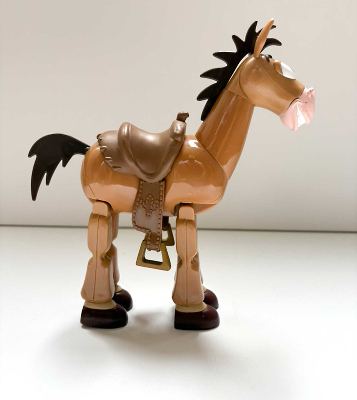
€ 400 bids
Hammer & Mold brings together original vintage toys, the companies that made them and the stories that made them famous. Explore the history. Watch the commercials. Buy the originals.
Live auctions on original vintage toys. Place a bid, or take it straight away with Buy now.
We organize the collection the way it was built: maker first. The maker is the molder; its toy lines live beneath it. Filter the lines by their maker, or sort them across the years.
The line that invented the modern 3¾-inch action figure, and sold an empty box one Christmas to do it.
Meet the Molder →Proton packs, ecto-plasma and gross-out mutations. The strangest, most inventive toys on the shelf.
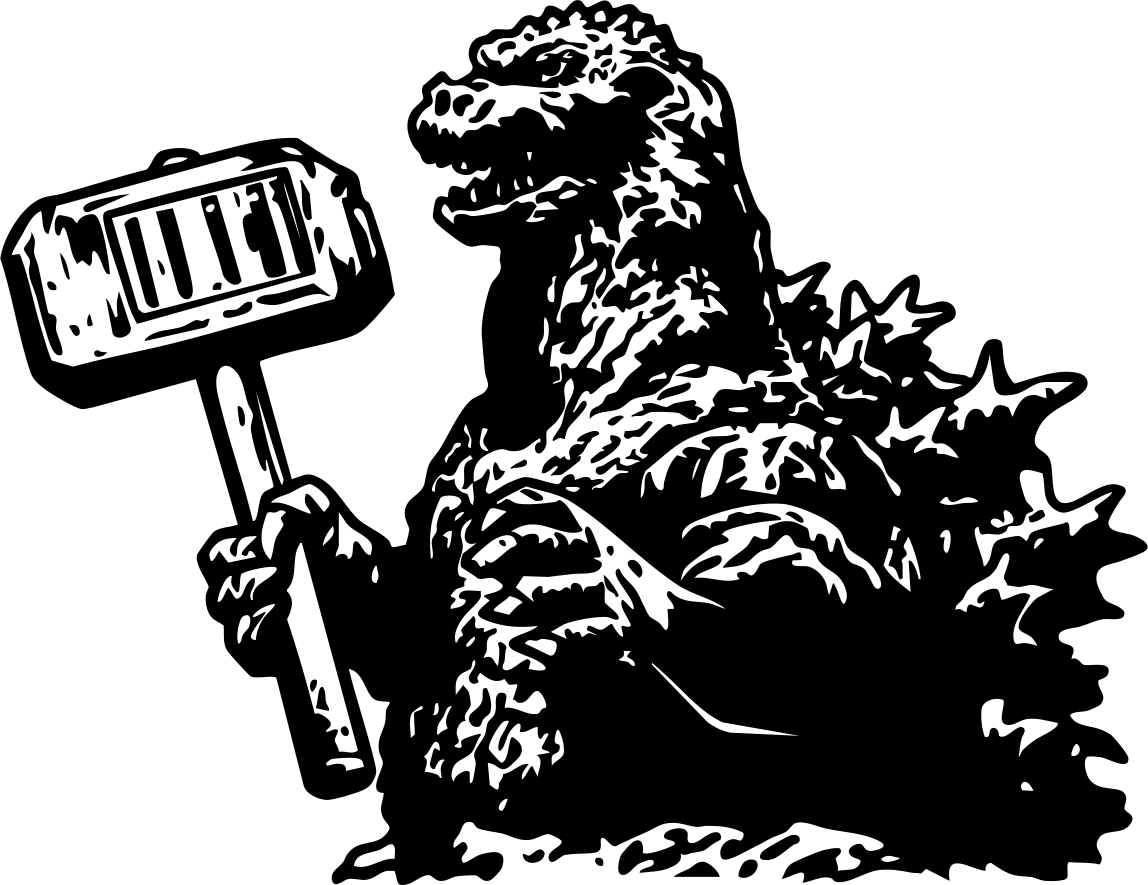
Meet the Molder →Soft-vinyl monsters from Tokyo's tokusatsu boom. Godzilla, Ultraman and the beasts of late-night television, hand-poured and hand-painted.
Meet the Molder →The material itself. Hollow Japanese soft vinyl, slush-cast in heated metal moulds, pulled out by hand and sprayed by hand. And Hiroshi Goto, who has been painting it for seventy years.
Meet the Molder →Mutant reptiles, pizza and ooze. The line that turned a black-and-white comic into a worldwide phenomenon.
Meet the Molder →The gentle alien of 1982. Poseable figures, glowing fingers and the most famous bicycle in cinema.
Meet the Molder →Mr. T, machine guns and a black van. No plan survived contact, but the toys did.
Meet the Molder →Four inches of hard plastic, one move each, and a ring to throw them in.
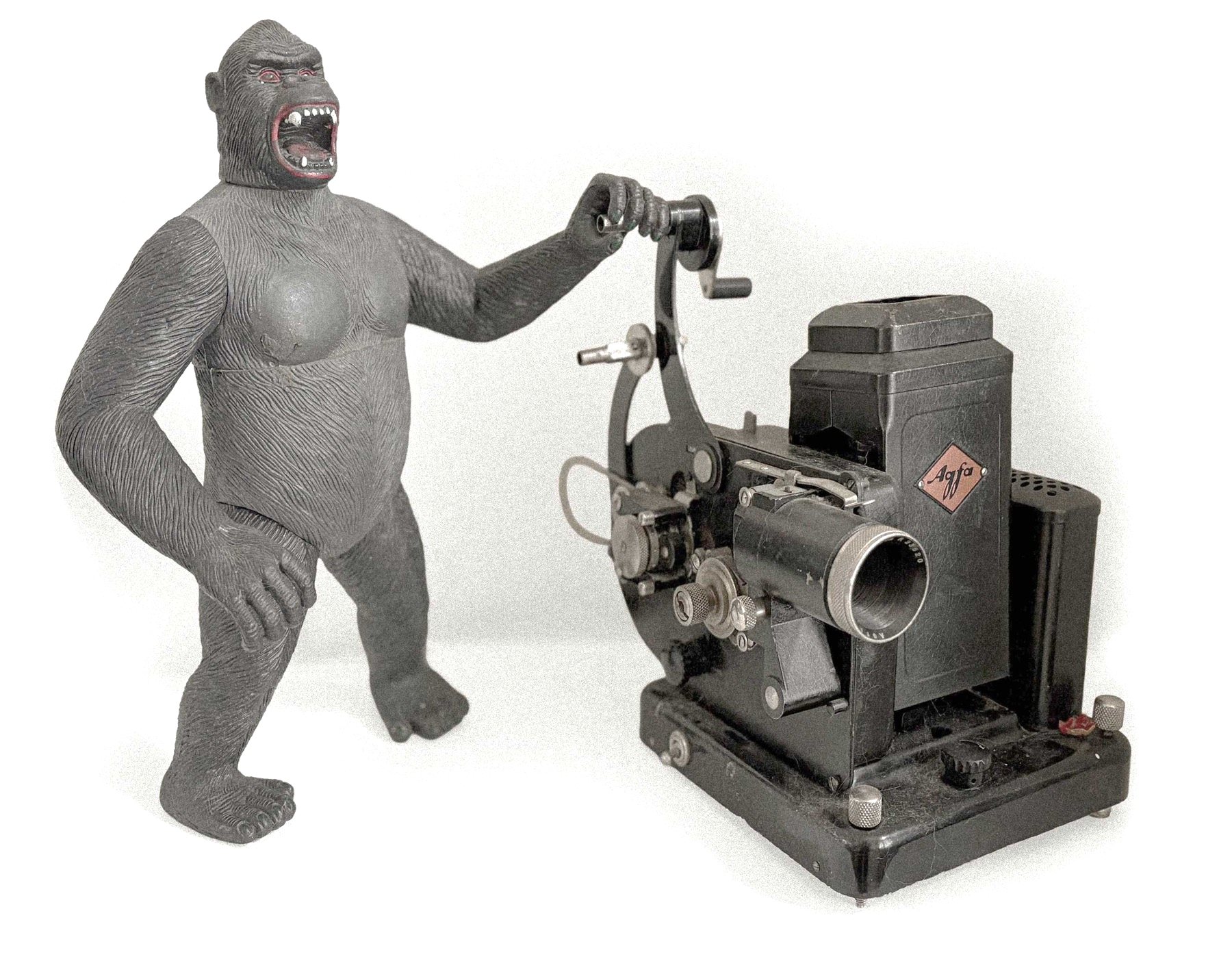
Meet the Molder →The monsters you could actually own. Cheap vinyl on a hook by the till, from the company a Holocaust survivor built out of a ten-cent bouncing ball.
Meet the Molder →Britain's Star Wars line, from the company that also made Action Man. Its Death Star is printed card because plastic cost too much, which is exactly why it is now the one collectors chase.
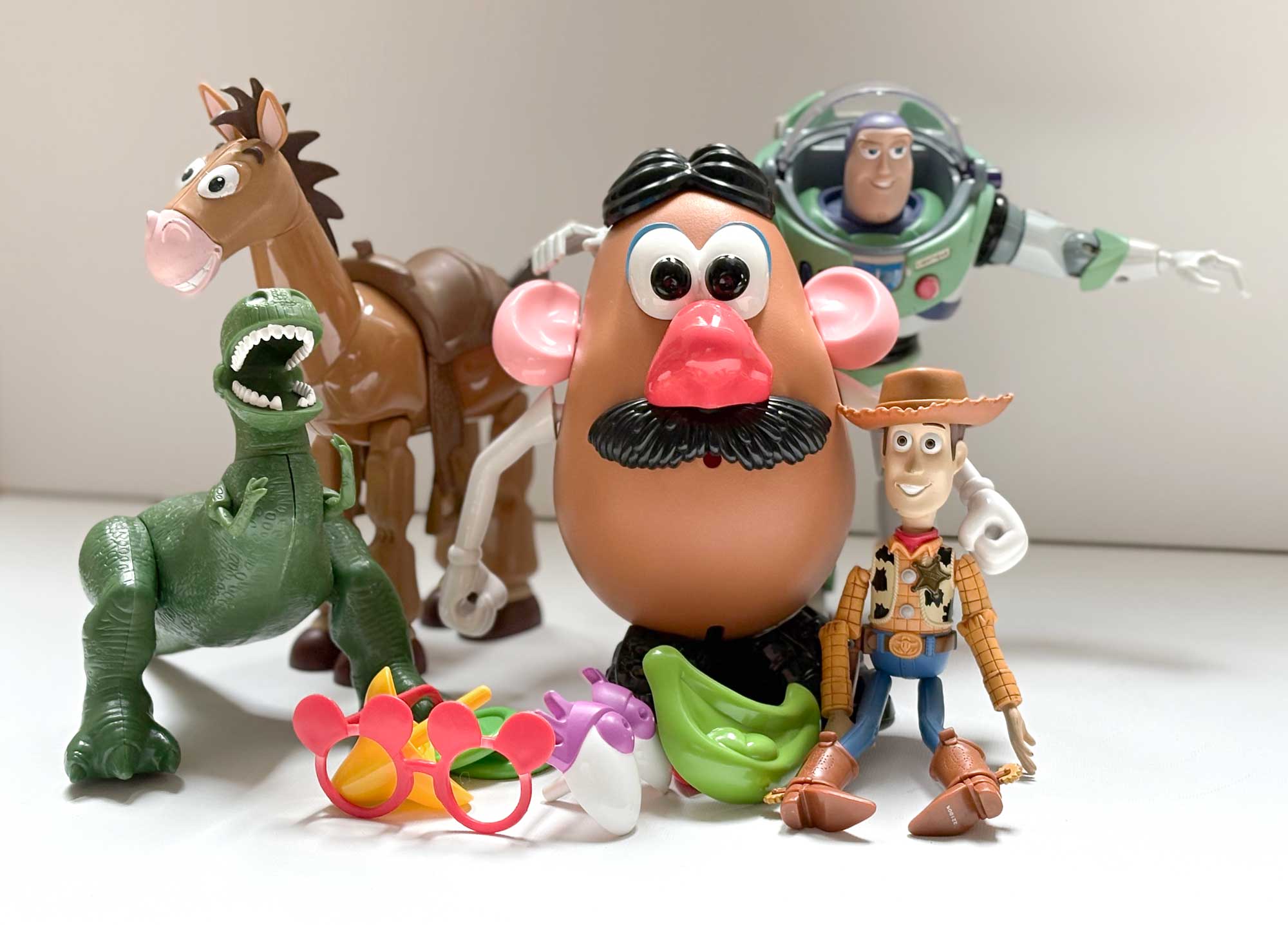
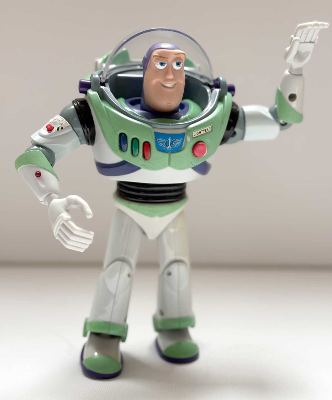
Meet the Molder →The toys about toys. Pull-string Woody and Buzz, straight from Pixar's first feature.
Meet the Molder →Anyone can sell an old toy. We want to tell you what you're actually looking at.
Year, maker, series, scale, accessories and condition. The details collectors actually want to know.
Who made it, when it appeared and what made it special. The story behind the plastic.
The original TV commercials that introduced these toys to the world, right where they belong.
The little Canadian toy company that made one of the smartest bets in toy history. Mattel passed. Hasbro passed. Thinkway looked at a cowboy, a spaceman and a film nobody had ever made before, and said yes.
In January 1995, Albert Chan of Thinkway Toys was at the Toronto Toy Fair when Disney's Canadian licensing team approached him with an unusual proposition. There was an animated film coming that November. Not drawn animation. Computer animation.
Chan was shown early artwork of two characters: a cowboy named Woody and a space ranger named Buzz Lightyear. Disney wanted to know whether Thinkway was interested in making the toys.
It was a much bigger gamble than it sounds today. Toy Story would be Pixar's first feature and the first feature-length film created entirely with computer animation. There was no precedent for it, and nobody knew whether an audience would sit with characters that looked like this for ninety minutes.
And there was another problem. Time. Toy companies normally wanted well over a year to develop a major film line. Thinkway had months, because Disney was shopping a Thanksgiving 1995 release at the beginning of that same year.
Mattel had passed. Hasbro had passed. Thinkway said yes.
The company went to New York the following month, presented its ideas to Disney's American team and secured the master toy licence for Toy Story. By August, Woody and Buzz were real toys. By November, the world knew exactly who they were.
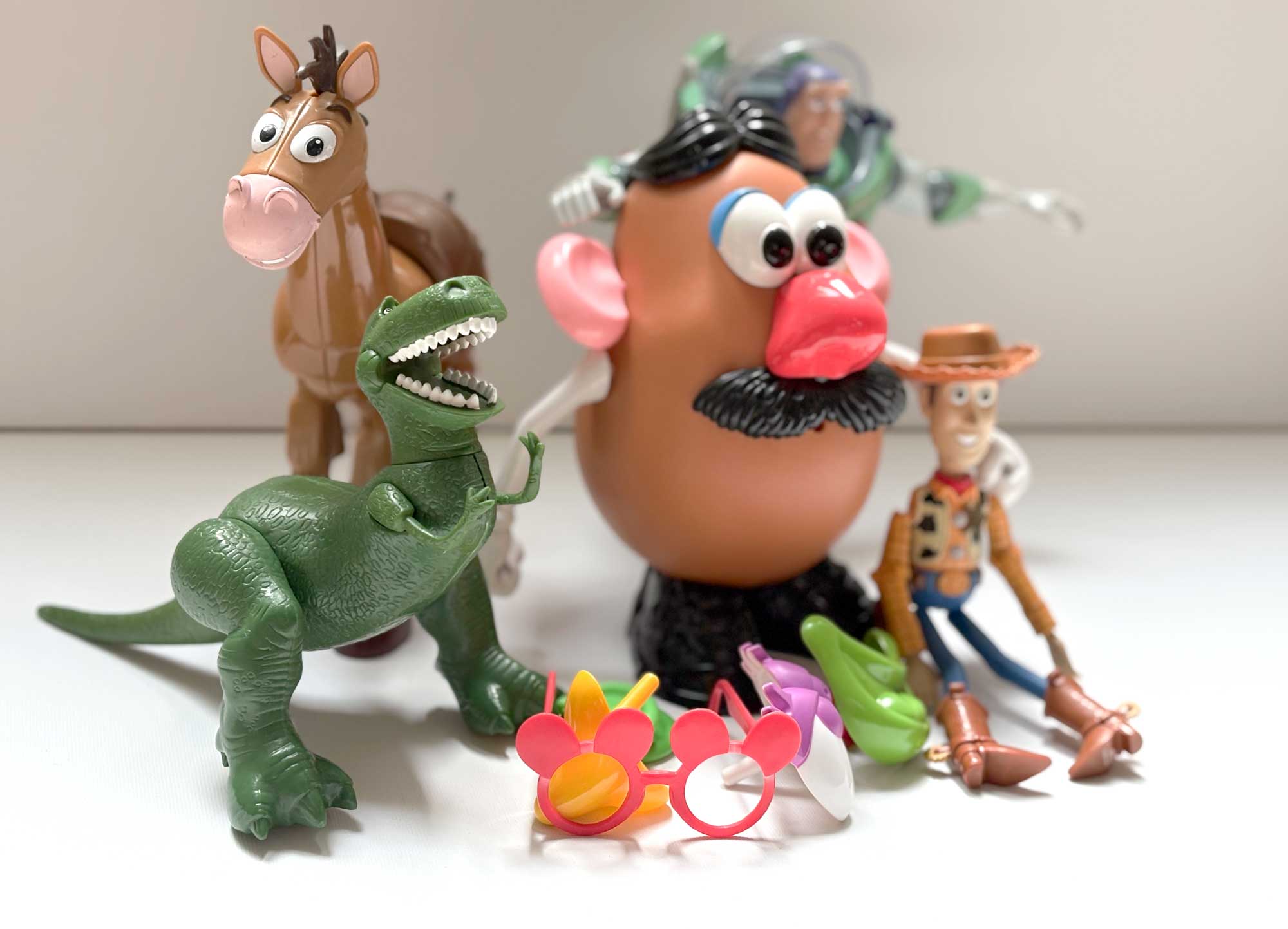
Toy Story itself existed because another unlikely bet had been running for almost a decade. In 1986, shortly after leaving Apple, Steve Jobs bought George Lucas's computer graphics group and turned it into an independent company called Pixar.
For years it struggled to find a business. Pixar sold expensive graphics computers. It developed rendering software. It made commercials. And in between, a small group led creatively by John Lasseter kept making increasingly ambitious animated shorts. Jobs kept funding it.
Disney and Pixar agreed to make one together in 1991. That film became Toy Story. Jobs did not create Woody or Buzz, but he gave the people who did the time, the money and the company they needed to prove that computer animation could carry a whole movie.
When Toy Story opened on 22 November 1995, Pixar was still a relatively small technology company attempting something nobody had done. A week later, Jobs took it public, in the biggest flotation of the year. The experiment was over. Pixar was a film studio. And Thinkway had the toys.
There was one particularly important instruction from Pixar. Buzz Lightyear was not to become a conventional action figure.
In the film, Buzz believes he is a real 12-inch toy. John Lasseter wanted the toy in the shops to be 12 inches too, rather than shrunk to the five-and-a-half-inch action-figure format standard at the time. That was unusually large, and Albert Chan initially questioned whether parents would pay the higher price. Pixar insisted. Thinkway trusted them.
The result was the Ultimate Talking Buzz Lightyear: twelve inches tall, with pop-out wings, lights, electronics and phrases from the film. Beside him stood a fifteen-inch pull-string Woody.
For a child leaving the cinema, something remarkable had happened. The toys existed at almost exactly the scale they had just seen on screen. They did not look like merchandise based on Toy Story. They looked like Woody and Buzz had climbed out of it.
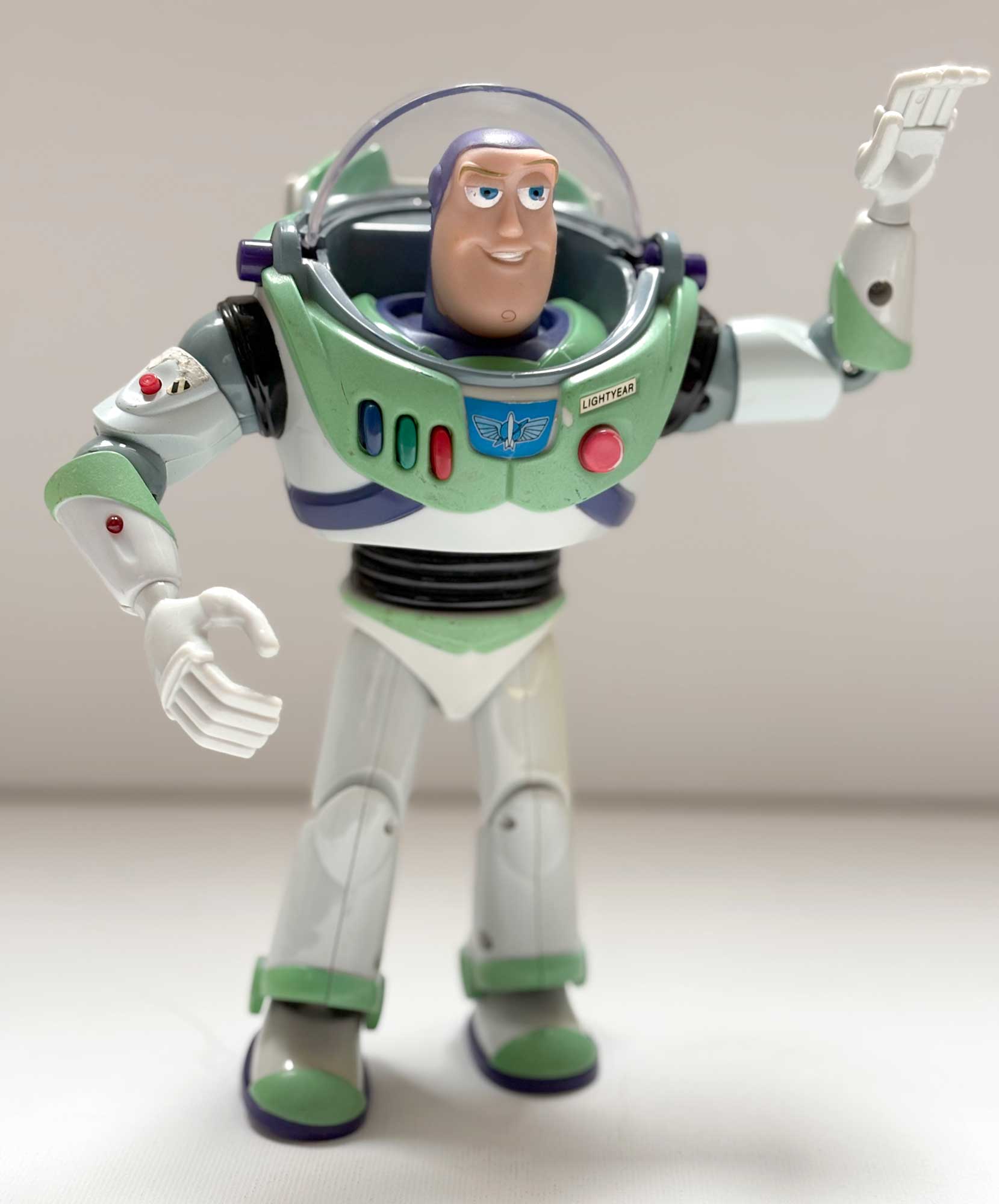
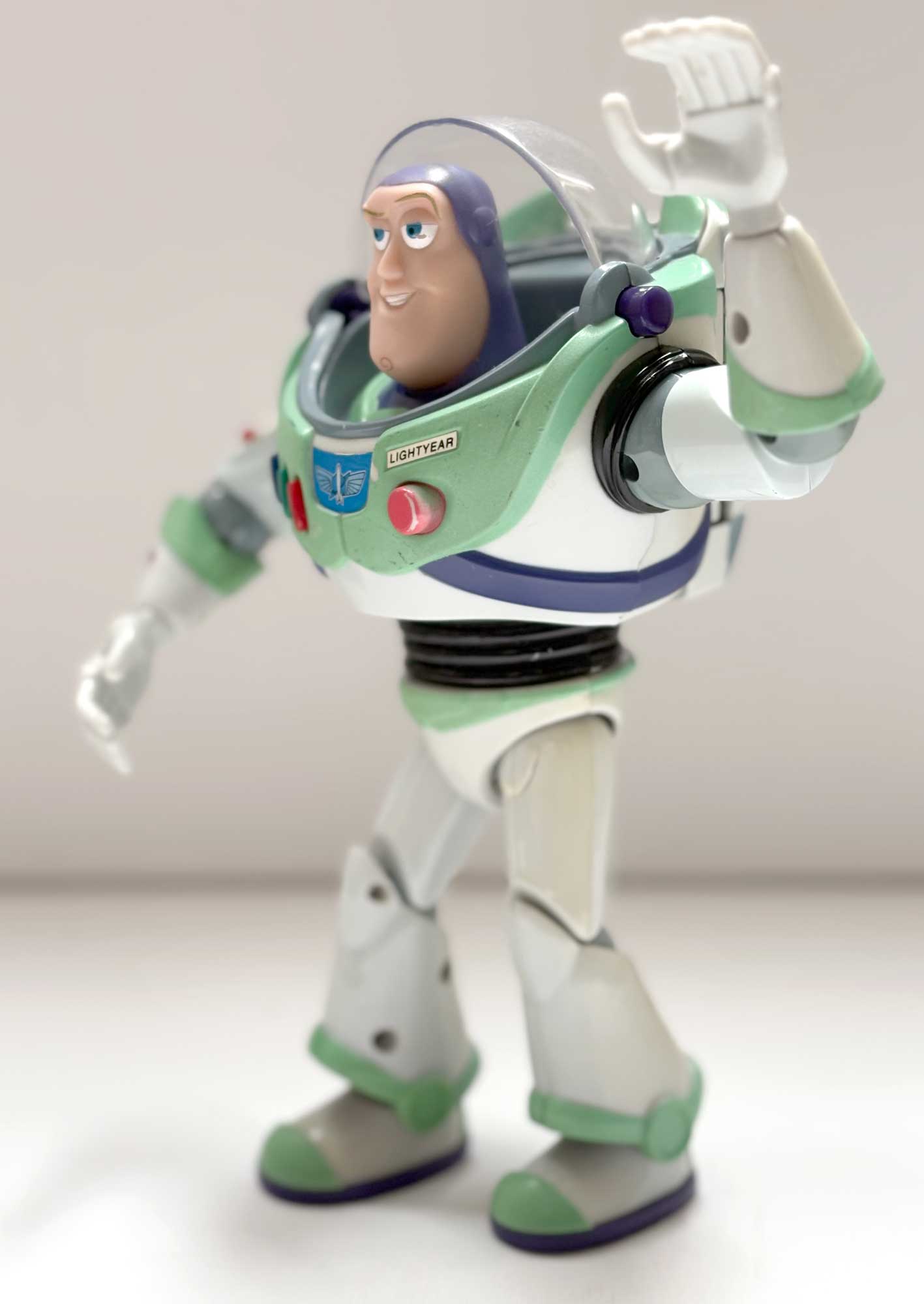
Toy Story opened at number one in America on 22 November 1995 and demand for the toys exploded. Thinkway went from being the small company willing to take a risky licence to trying to supply one of the hottest properties in the world. By that December it was selling Woody and Buzz figures in the millions, and retailers were still running out.
Buzz became particularly difficult to find. Shops sold out, parents searched from one to the next, and production could not catch demand. Thinkway had the problem every toy company dreams of and dreads at the same time: everyone wanted what it had made, and there were not enough of them.
The shortage became famous enough that Pixar turned it into a joke. In Toy Story 2, Barbie guides the toys through Al's Toy Barn past an aisle overflowing with Buzz Lightyears. The joke is that the retailers finally have plenty, a few years too late.
Twenty-six years with the biggest licence in animation, won in a month and held for a quarter of a century.
The spots for the toy nobody could keep in stock. They play inline here; the title opens the clip on YouTube.
Our own reading of the toys, checked against the public record. Follow these if you want to go further than we did.
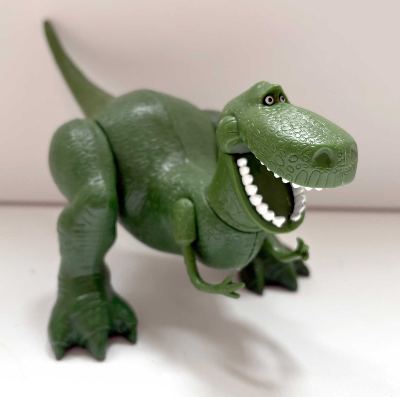
A private collection that grew into something bigger. This is where it comes from, and what we hunt for.
What began as a handful of childhood pieces turned into a hunt: for the odd, the overlooked and the wonderfully strange. The finding, the careful cleaning, the search for a missing weapon or a lost accessory, the stories behind each toy. Somewhere along the way the collecting became a way of living.
We are drawn to the weird ones. Toys that were played with, loved and actually handled, over the pristine pieces sealed and graded never to be opened again. A toy locked in plastic, never to be read or felt, becomes a frozen artifact. We would rather keep them alive.
Have a collection of your own? We buy and take on whole collections and single pieces. Tell us what you have, send a few photos, and we will look after it.
Upload a few clear photos. Our AI identifies the toy, dates it, checks the condition and builds the listing for you. It also reviews recent sales to suggest a fair starting price.
Identification is free. You only use a listing when you decide to sell.
Add clear photos of the front, back, accessories and any visible flaws. Include a close-up of the maker's stamp where possible.
You can also add your own source or a note of direction, either to point us at something you already trust or to have the identification double-checked against it.
A worn or partly legible stamp is fine.
Our AI reads the toy the way Hammer & Mold does, dating it from the moulded stamp rather than the box, then identifies the year, line and variant, grades the condition and reviews recent sales to suggest a price.
You see the identification, the sources, the condition, the pricing and the listing details before anything goes live. Change what you like, set your Reserve or Buy Now price, then approve the listing.
Toy identification is free and unlimited. Photograph anything and we will identify it, date it, show what originally came with it and grade its condition. You only pay when you list. Choose a package based on how much you sell, or let us work out which one costs you least.
You do not have to run an auction to get rid of a box of toys. Send us photographs, we tell you what it is worth, and we make you an offer for the lot. You post one parcel and we pay. No listing, no waiting, no wondering whether it sells.
We would rather you picked the right one than the one that suits us, so here is the arithmetic on a toy we think will fetch €30.
| On a toy worth about €30 | Sell it to us | Sell it through us |
|---|---|---|
| You receive | € 15,00 | € 25,50 |
| When | Within a week | After it sells |
| If it does not sell | Our problem | You still have it |
| Photographs, listing, packing | We do it | You do it |
| If it turns out to be rare | We keep the upside | You keep it |
The honest reason: assessing one toy and assessing forty costs us nearly the same in setup, so a whole collection is worth far more of our attention than a single common figure.
1. You send photographs. A few clear shots of what you have, laid out. For anything you think is worth something, add a close-up of the moulded stamp on the feet or the lower back: that text is what lets us date it and find what it really sells for.
2. We tell you what it is, before we make an offer. You get the identification either way, and you keep it whether you sell to us or not. If we think a piece is worth more than we would pay for it, we will say so and tell you to list it yourself.
3. We make one offer for the lot. Within two working days, with the reasoning attached: what we think each piece fetches and what we are paying for it. No haggling and no fishing.
4. You post it, we pay. We send you a prepaid label. Payment goes out the day the parcel arrives and matches the photographs. If something is not as described you get the parcel back at our cost, not a lower offer.
Photographs and a way to reach you. Nothing else needed, and nothing is committed by sending it.
Toy identification is always free and unlimited. Photograph anything and we will tell you what it is, who made it, when it was made and what condition it is in. You only pay when you sell. Choose a package based on how much you sell each month. Every package includes price research, buyer protection and live postage rates.
Tell us roughly how much you sell. We will compare the monthly fee and selling fee together and recommend the cheapest package.
Compare what buyer and seller pay together. On a €100 hammer price, Catawiki charges the seller 12.5% and adds another 9% buyer fee. The buyer pays €109 while the seller receives €87,50. Hammer & Mold adds no buyer fee. A €100 hammer price means the buyer pays €100.
| On a €100 hammer price | Buyer pays | Seller receives | Total platform fees |
|---|---|---|---|
| Catawiki | € 109,00 | € 87,50 | 21,5% |
| Hammer & Mold, Starter | € 100,00 | € 85,00 | 15,0% |
| Hammer & Mold, Trader | € 100,00 | € 88,00 | 12,0% |
| Hammer & Mold, Dealer | € 100,00 | € 92,00 | 8,0% |
A monthly package fee buys you a lower selling fee. Sell enough in a month and the saving becomes greater than the subscription. Sell less, and Starter is cheaper. The table shows the total cost of each package at different monthly sales volumes.
Live lots from this seller.
Identifying a toy is free and unlimited on every package. A listing is what costs a token. Every package includes the price research, buyer protection on every lot, and postage quoted live from the carrier.